The Ultimate Guide to the HR Value Chain: Everything You Need to Turn People Strategy into Business Profit
Most business leaders see HR as a “cost center,” meaning a department that only spends money without bringing any in. The HR Value Chain changes this. It is a mathematical way to show how hiring, training, and supporting people leads directly to higher profits and better business results.
HR leaders often struggle to prove their department makes money. Most business leaders see HR as a “cost center,” meaning a department that only spends money without bringing any in. The HR Value Chain changes this. It is a mathematical way to show how hiring, training, and supporting people leads directly to higher profits and better business results.
What is the HR Value Chain?
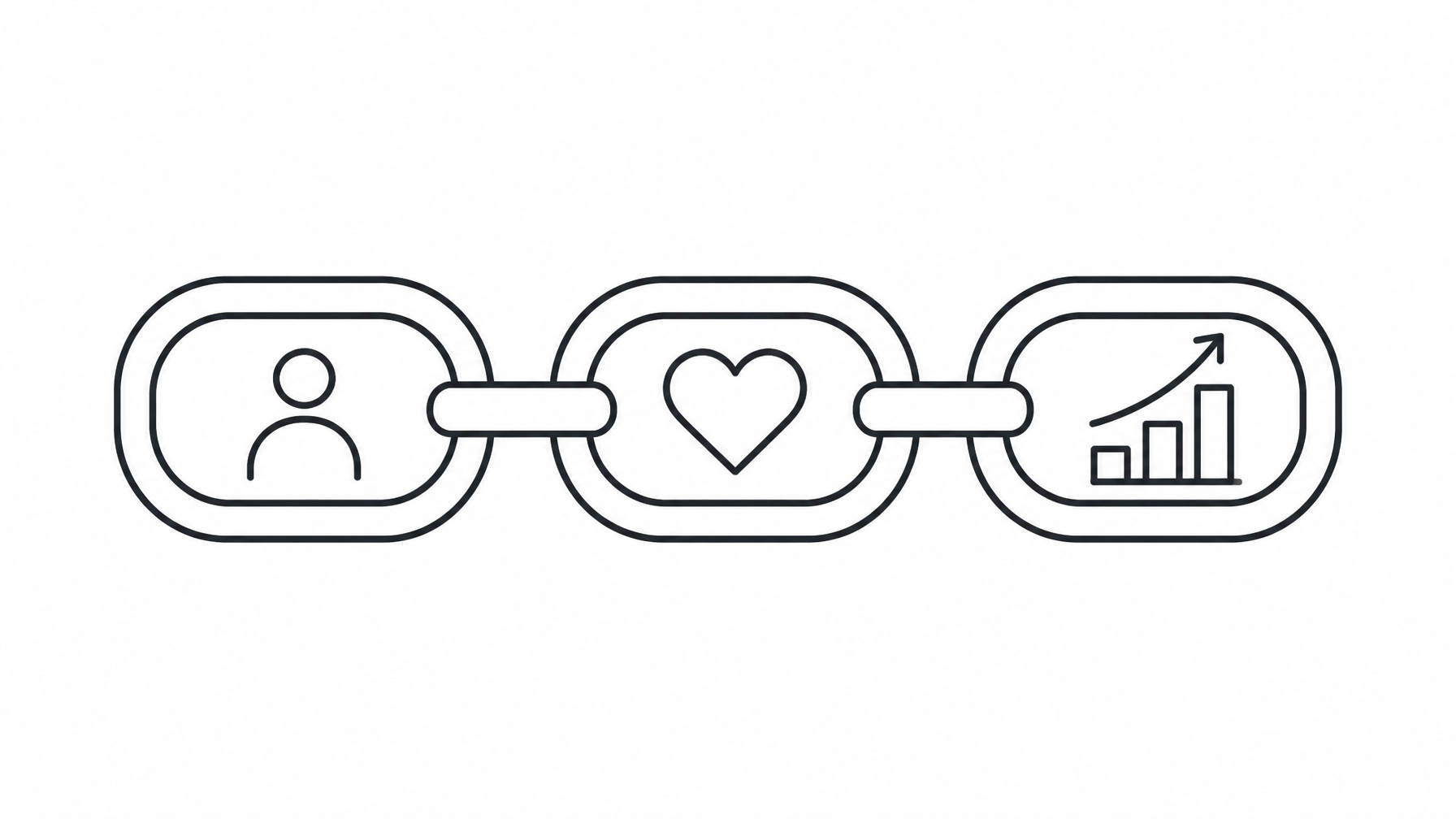
The HR Value Chain is a model created by researchers Paauwe and Richardson in 1997. While that sounds very academic, the next time someone calls your team a cost centre, it could be quite a useful model to reference. It explains that HR does not create profit directly. Instead, HR starts a chain reaction.
When you perform an HR activity, it changes how employees feel and act. When employees feel and act differently, they work better. When they work better, the company makes more money.
When HR is viewed from this lens, it stops you from just reporting how many people you hired. Instead, it lets you report how those new hires increased the company’s market share.
The Three Components of the Chain
To use this model, you must understand the three distinct parts of the chain.
1. HRM Activities (Efficiency)
These are the daily tasks your HR team performs. You measure these with efficiency metrics. These metrics tell you if you are doing things quickly and cheaply.
- Recruitment: How long does it take to fill a role?
- Training: How many employees finished their learning and development courses?
- Cost: How much did you spend on a new HR software?
2. HRM Outcomes (Effectiveness)
These are the results of your activities on your people. You measure these with effectiveness metrics. These metrics tell you if your activities actually worked.
- Engagement: Do people enjoy their work and feel committed?
- Retention: Are your top performers staying or leaving?
- Skills: Do your employees have the specific abilities they need to do their jobs well?
3. Organisational Objectives (Business Results)
These are the goals the CEO and the Board care about. These are the final links in the chain.
- Profit: How much money did the company keep after all costs?
- Customer Satisfaction: Do customers like your product and come back for more?
- Innovation: How many new products or services did the company launch this year?
The Three Levels of HR Maturity IN the hr value chain
Not every HR department uses the value chain the same way. Most fall into one of three levels of maturity.
Level 1: Cost-Focused (The Transactional Stage)
At this level, HR focuses on saving money. You track how much you spend on recruitment and payroll. The goal is to keep costs low. This is “transactional HR.” It keeps the lights on, but it does not help the company grow. Leaders at this level often feel like they are constantly defending their budget.
Level 2: Outcome-Focused (The People Stage)
At this level, HR focuses on people metrics. You track employee engagement and turnover rates. You know that happy employees stay longer. This is a step up, but it still lacks a clear link to the company’s bank account. You can show that people are happy, but you cannot yet prove that their happiness paid for the new office.
Level 3: Strategic (The Business Value Stage)
This is the highest level. You design HR activities specifically to hit business goals. If the company needs to increase sales by 20%, you create a training program specifically for sales techniques. You then measure if the people who took the training actually sold more than those who did not. This level makes HR a strategic partner to the CEO.
The Advanced Model: Enablers and the Balanced Scorecard
The modern version of the HR Value Chain includes “Enablers.” These are things that make the chain stronger or weaker.
- Culture: A toxic culture breaks the chain even if your training is excellent.
- Technology: Good tools, like those mentioned in the HybridHero 2026 HR Guide, make HR activities more efficient.
- Leadership: Managers are the ones who actually deliver the HR experience to employees.
To track all of this, senior leaders use a Balanced Scorecard. This is a report that looks at the company from four angles: financial, customer, internal processes, and learning and growth. The HR Value Chain provides the data for the “learning and growth” section.
How to Implement the HR Value Chain
Follow these steps to start using the value chain in your organization.

- Start at the end: Ask your CEO what the top three business goals are for the next year.
- Work backward: Identify which employee behaviors will help reach those goals. If the goal is innovation, the behavior is “creative problem-solving.”
- Map your activities: List the HR programs that encourage those behaviors.
- Identify the gaps: If you have no program for creative problem-solving, you have a gap in your chain.
- Update your KPIs: Stop reporting only on “training hours.” Start reporting on the “increase in revenue per employee” after training.
Real-World Example: Learning and Development (L&D)
See how a simple L&D project looks at different maturity levels. Imagine a company launching a “Hybrid Management” course.
The Level 1 Approach:
The HR team tracks how many managers attended the 2-day workshop. They report that 90% of managers finished the course and they stayed under the $50,000 budget. The CEO sees a $50,000 expense.
The Level 2 Approach:
The HR team surveys the managers after the course. They find that wellbeing and health scores improved by 15%. They also see that turnover in those teams dropped by 5%. The CEO sees that employees are happier.
The Level 3 Approach:
The HR team tracks project delivery times. They find that teams with “trained” hybrid managers finished projects 10% faster than teams with “untrained” managers. This 10% speed increase allowed the company to launch a new product two months early, resulting in $2 million in extra revenue. The CEO sees a $50,000 investment that returned $2 million.
Measuring for the Future
Global standards like ISO 30414 now exist to help companies report on their “human capital” in a standard way. This makes your HR data as credible as financial data. According to Gartner’s 2026 CHRO priorities, the ability to link talent to business value is the top skill for HR leaders this decade.
Use the HR Value Chain to move beyond “feeling” that HR is important. Use it to prove that your people are your most profitable asset.
Sources:
Related Articles
-

The Botsitting Tax: Your AI Productivity Gains Are Costing You 6 Hours a Week
Artificial intelligence promised to liberate your workforce from the mundane. Instead, it created a new category of labor that is currently draining over six hours of productivity from every employee each week. This hidden workload is called botsitting, and it represents the invisible friction between AI generation and human-ready output. While 92% of business leaders…
5–8 minutes -
100% Completion, 96% Retention: Inside DXC’s Neurodiversity Programme That Actually Works
DXC Technology’s Dandelion Program designed the Dandelion Programme as a two year journey for neurodivergent individuals, including those with autism, ADHD, and dyslexia.
6–9 minutes -

Remote work Trends 2026 h1: Remote Jobs Surged 22% in Q2
Remote jobs are surging again as the second quarter of 2026 shows a significant shift in the hiring landscape.
2–3 minutes
Most Read
Get it in your inbox
The EMEX weekly newsletter — insight for HR leaders every Thursday.
Advertisement