The team performance blind spot
Everyone in people management knows the toolkit: engagement surveys, culture audits, performance reviews. Organisations have never had more data about their people. Yet our research among more than 400 global tech leaders found that fewer than a quarter said their organisation has clear, aligned priorities. In other words, most lack a shared view of what…

Everyone in people management knows the toolkit: engagement surveys, culture audits, performance reviews. Organisations have never had more data about their people. Yet our research among more than 400 global tech leaders found that fewer than a quarter said their organisation has clear, aligned priorities. In other words, most lack a shared view of what matters most and what to deliver first.
Think of it this way: we already measure our people (how engaged they feel) and our culture (how the organisation behaves), but the unit that turns strategy into results sits between the two, and it goes almost entirely unmeasured. That unit is the team itself.
The individual paradox
When results aren’t coming through, the instinct is to look at individual performance. A great many of us will recognise the scenario: a team isn’t quite reaching its potential, so its members are handed highly focused training or new personal objectives. The logic is that if people perform better in isolation, the team will benefit accordingly.
It rarely works, and the reason is simple: individual and team performance are related but not the same. A team of highly capable individuals can still fall short; a genuinely joined-up team routinely enables people to achieve more than they could alone. Objectives and development matter, but they don’t give leaders a way to optimise collective performance.
The data bears this out. Around three-quarters of the leaders in our research reported competing priorities within their organisation, the single biggest threat to execution speed. And when we benchmarked 321 teams in the same study, fewer than half met the 83% execution threshold that defines a high-performing team. This isn’t a talent shortage; it’s a measurement gap. Leaders simply can’t see where the friction is.
What makes a team tick
Across every high-performing team we’ve studied, four characteristics consistently show up: purpose, trust, clarity and simplicity. Our benchmarking data shows exactly where most teams fall down.
Purpose is the direction for everything else. The best-performing teams share a common understanding of what they’re trying to achieve and how that ladders up to business objectives. Without it, people can end up working at odds with one another without anyone noticing the disconnect.
Trust is foundational, and it’s the characteristic teams find hardest: only 40% reach the benchmark we classify as industry-leading. This lines up with Google’s widely cited Project Aristotle research, which found that psychological safety, i.e. the belief that it’s safe to take interpersonal risks, was the single biggest factor distinguishing high-performing teams. Without it, problems stay hidden until they hit delivery, often because people fear being called out individually.
Clarity is often assumed and matters more than we realise, covering where responsibility lies and how success will be judged, yet only 60% of teams achieve industry-leading levels of it. Clear expectations let teams stop negotiating internally and start focusing on results.
Simplicity is the biggest gap of all: just 30% of teams proactively strip out unnecessary complexity. Get this right and the reduction in friction frees up real time for delivering outcomes.
Why it pays to measure teams
In organisations where these four conditions are measured and deliberately strengthened, our research shows pipeline growing 11x within a single cycle without increased spend, productivity rising by 83% without additional headcount, and zero regrettable attrition through hypergrowth.
Retention matters more than many leaders realise, too and it is the antidote to the blind spot. High attrition is often the clearest outward sign of a poor team experience, which is why the organisations in our research that strengthened these four conditions saw zero regrettable attrition through hypergrowth. And with new hires taking six months or more to reach full productivity, every avoidable departure is a direct and very tangible cost. Retention isn’t just a wellbeing metric it’s a performance indicator.
If teams are responsible for delivering strategy, they need to be measured in a real time and actionable way, so leaders can see friction before it shows up in performance. This isn’t about creating more metrics for their own sake; it’s about finally measuring how well work actually gets done. Get purpose, trust, clarity and simplicity right, and you create the conditions for teams to execute at a consistently high level – and that’s in everyone’s interests.
Related Articles
-

The experience gap is also a trust gap
Young workers are told they need experience before they can be trusted with responsibility. But without trust, feedback and a chance to try, where is that experience supposed to come from?
6–9 minutes -
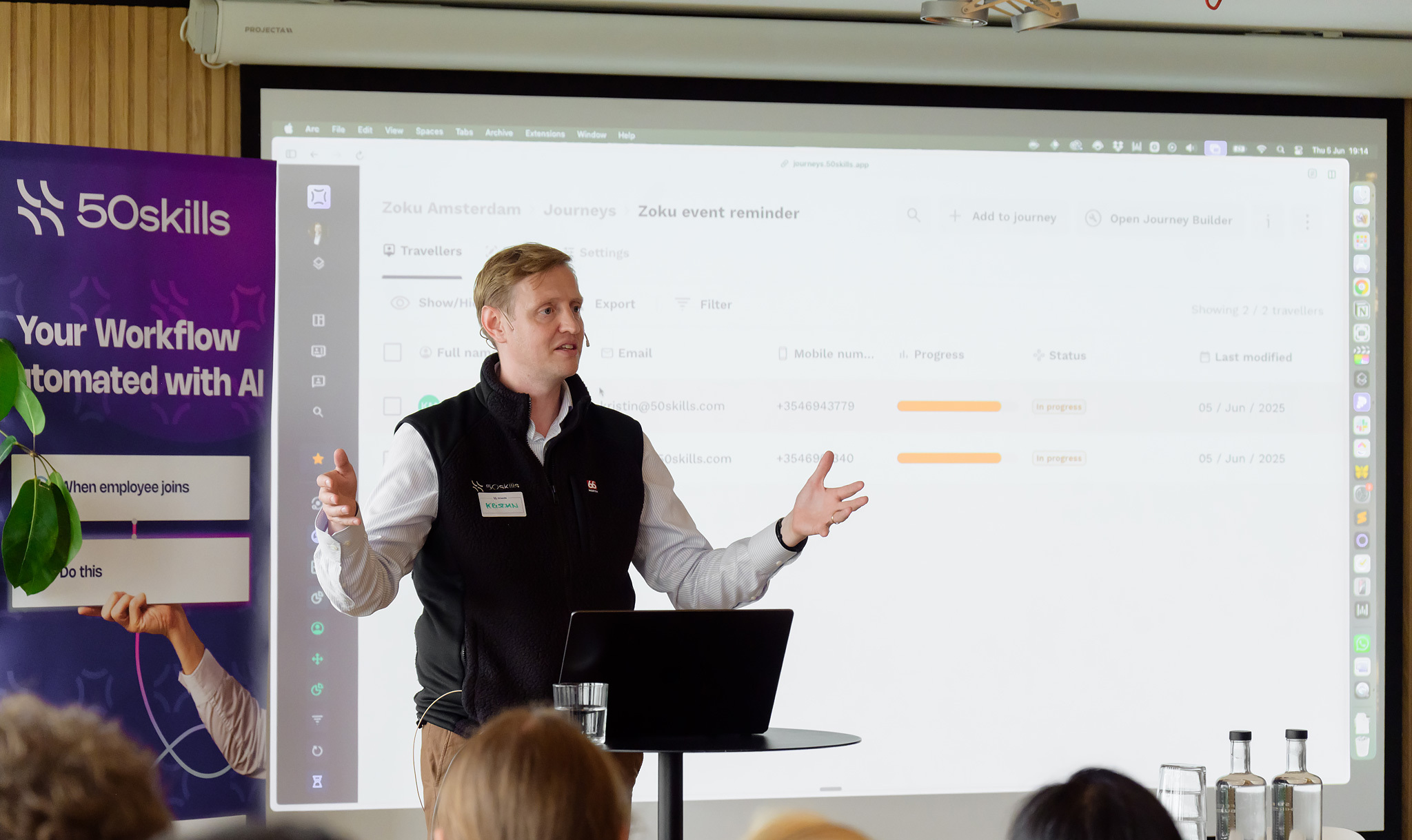
HR AI is moving from answering questions to running the workflow
50skills has raised $6 million after customers automated millions of people-process actions. The more interesting story is what happens when AI stops assisting HR and starts executing the work.
3–5 minutes -
HeadFirst Global becomes Vertage – but the bigger shift is from headcount to outcomes
The EUR10 billion workforce group is uniting 11 operating businesses under one brand and platform. Its more ambitious bet is that companies will increasingly define the work they need done first, then use a mix of specialist talent and AI agents to deliver it.
2–4 minutes
Most Read
Get it in your inbox
The EMEX weekly newsletter — insight for HR leaders every Thursday.
Advertisement