AI use is rising. Access to learning is falling.
PwC’s 2026 Global Workforce Hopes and Fears Survey finds AI adoption is accelerating while fewer workers can access the development they need — widening the gap between employees already benefiting from AI and those still trying to catch up. AI adoption at work is moving faster than employee development. PwC’s 2026 Global Workforce Hopes and…

PwC’s 2026 Global Workforce Hopes and Fears Survey finds AI adoption is accelerating while fewer workers can access the development they need — widening the gap between employees already benefiting from AI and those still trying to catch up.
AI adoption at work is moving faster than employee development.
PwC’s 2026 Global Workforce Hopes and Fears Survey, released on 29 September, found that 64% of workers had used AI at work in the previous 12 months, up 10 percentage points year on year. Daily use of generative AI rose from 14% to 22%.
At the same time, access to learning and development has gone backwards. Just 51% of workers said they could access the learning and development resources they need, down from 59% last year.
PwC surveyed 49,364 workers across 48 countries and regions and 29 sectors in May and June 2026.
A workforce moving at different speeds
The divide is clearest in the group PwC calls the “engine room”: 56% of respondents whose skills are less scarce and who are not yet far along the AI learning curve. Only two in five of this group said they had access to the learning and development resources they need.
Workers using AI every day reported a markedly different experience. Some 68% said they were confident in their job security, compared with 57% of infrequent users. Daily users were also 15 percentage points more likely to trust senior management and 21 points more likely to feel confident they could learn new skills.
Those figures do not show that AI use itself causes higher confidence. But they do point to an increasingly uneven employee experience: some workers are getting the tools, practice and support to build capability, while others are at risk of falling further behind.
The findings echo a wider problem EmEx has covered in its look at the AI upskilling wave: buying AI tools is not the same as building workforce capability.
Employers may not know where the gaps are
A separate study from Harvard Business Review Analytic Services, conducted in association with Nexthink, suggests employers may also lack the visibility to target support effectively. The study of 259 people involved in organisational AI decisions found that 58% agreed employee uptake of AI was outpacing IT’s ability to monitor and govern its use. Some 42% said their existing data and technology infrastructure did not support AI monitoring.
Richard Matthews, Senior Solution Consulting Director at Nexthink, said this makes it harder for organisations to know which employees are getting value from AI and which have stopped using it.
“Access to AI tells you very little on its own,” Matthews said.
His argument is that organisations need a better picture of where AI is helping, where employees are hitting friction and where additional training or support is needed. That visibility does not have to mean indiscriminate employee surveillance; it does mean giving HR, L&D and IT enough evidence to see whether tools and training are reaching the people who need them.
For employers, the PwC findings make the risk fairly concrete. AI adoption is increasing. Learning access is decreasing. If those two lines keep moving in opposite directions, the workforce skills gap is likely to become harder, not easier, to close.
Related Articles
-
Autistic or ADHD? 5 questions to ask before your next job interview
Job interviews can reward fast answers, social fluency and comfort with ambiguity as much as they test whether somebody can do the job. For autistic and ADHD candidates, a few questions in advance can help make the process fairer — and more useful for the employer too. Interviews are stressful for plenty of people. But…
2–4 minutes -
Hiring for potential: what H2FLY looks for when there is no blueprint
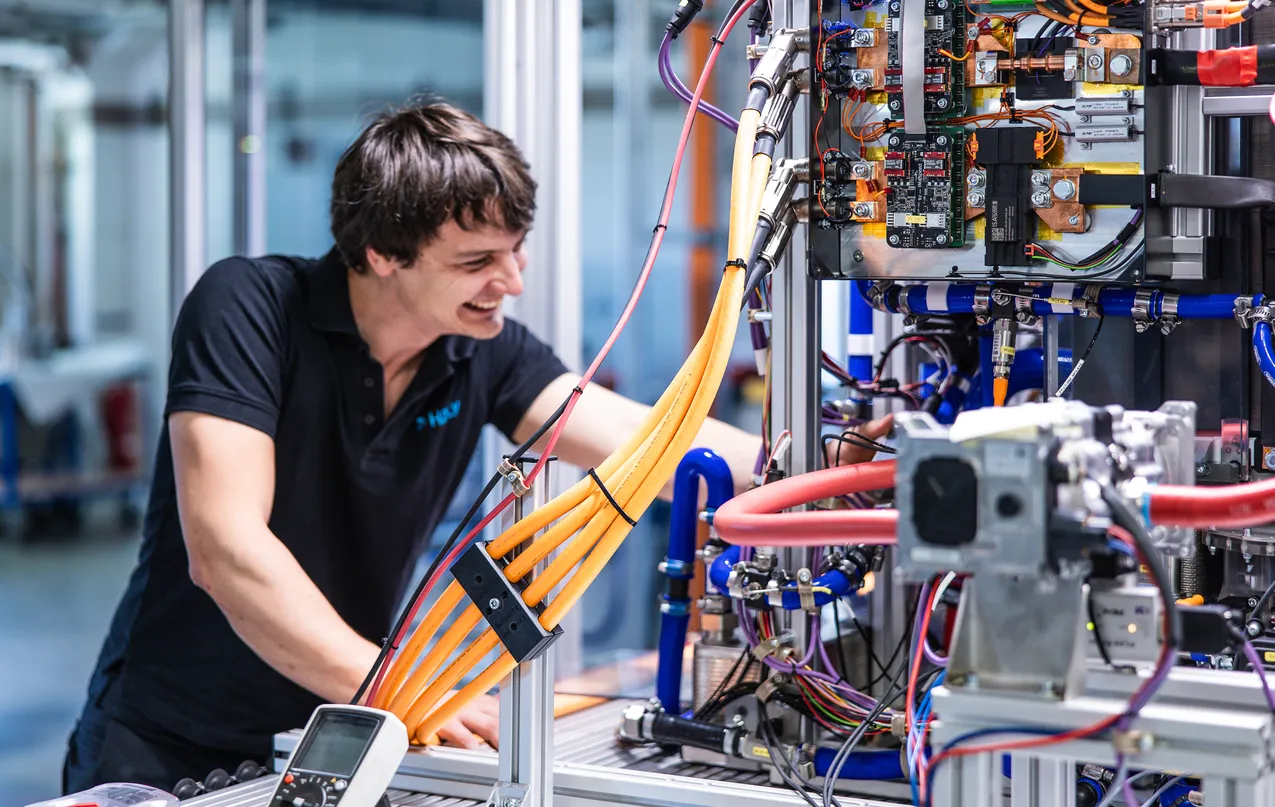
H2FLY is hiring engineers to solve problems that, in some cases, nobody has solved before. HR Manager Christina Fretz, explains why the company looks beyond keywords—and why rejecting AI screening does not mean relying on gut feel. What does the perfect CV look like when you are hiring people to do work that, in some…
5–7 minutes -

London Weighting and Location-Based Pay: Why Geography Raises Some Salaries and Discounts Others
London weighting pays a premium for working in the capital. But as other cities become more expensive and work goes global, does location-based pay still make sense?
4–6 minutes
Most Read
Get it in your inbox
The EMEX weekly newsletter — insight for HR leaders every Thursday.
Advertisement