The Employment Rights Act stacks 3 changes into 15 months, meaning your dismissals could get more expensive
The Employment Rights Act brings a longer tribunal window, a shorter unfair dismissal qualifying period and no compensation cap, all inside fifteen months.
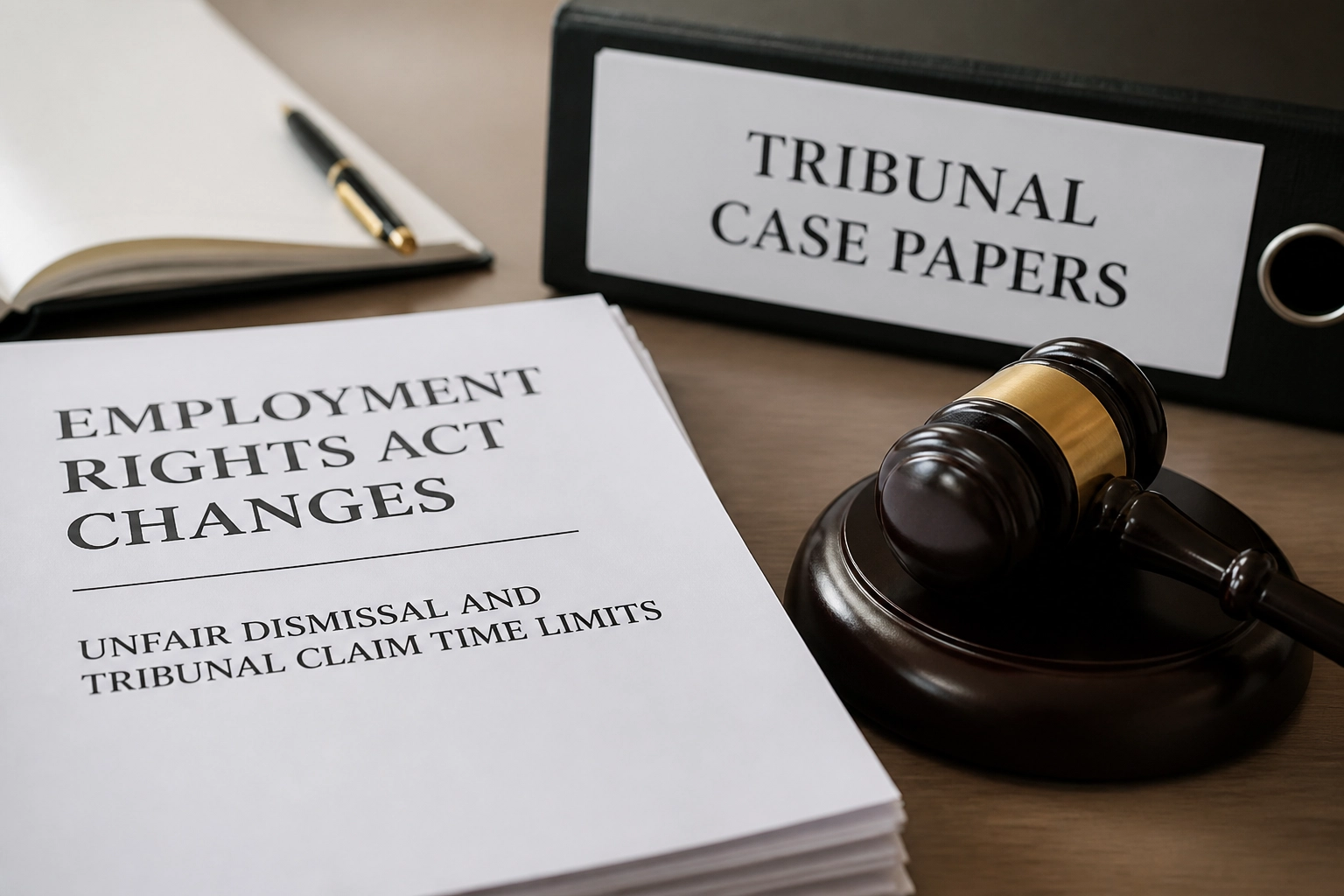
Three changes inside the Employment Rights Act land within the same fifteen-month window, and each one moves in the same direction.
From 1 October 2026, the deadline for bringing an employment tribunal claim doubles, from three months to six. From 1 January 2027, the qualifying period for unfair dismissal drops from two years to six months, and the cap on compensatory awards disappears completely. Read apart, these are three technical amendments most people wouldn’t bat an eyelid at. Read together, they describe one outcome: the expected cost of getting a dismissal wrong is climbing, at the same moment as the number of people able to challenge one is climbing too.
Is this three separate reforms, or one intentional shift that could significantly impact what a bad dismissal costs?
What the Employment Rights Act changes, and when
These are the 4 dates you need to know, verified against business.gov.uk’s employment changes hub and the government’s implementation timeline, both updated within the past fortnight.
- 1 October 2026: employment tribunal claim time limits rise from three months to six (breach of contract claims in Scotland move slightly later, on 9 November 2026).
- 30 October 2026: independent trade unions gain a new statutory right to access workplaces, and employers must tell staff about their right to join one.
- Also 30 October 2026: employers must take “all reasonable steps” to prevent sexual harassment, up from the current “reasonable steps” standard, alongside a new duty not to permit third-party harassment of employees.
- 1 January 2027: the unfair dismissal qualifying period falls from two years to six months, and the cap on compensatory awards is removed entirely.
The Employment Rights Act 2025 itself received royal assent in December 2025. What’s still moving through Parliament is the secondary legislation and codes of practice that switch each phase on, including the trade union access code and the Acas code on disciplinary and grievance procedures, out for consultation until 23 September 2026. The government’s own timeline update is explicit that all future dates “remain subject to parliamentary processes and may change.”
The compounding effect: a wider window, more people, no ceiling
Take the three in sequence and the mechanism is straightforward. The claim window doubles, so more people who might otherwise have missed the deadline get to bring a case at all. The qualifying period shortens from two years to six months, so roughly 6.3 million employees who currently sit in that band, about 22% of everyone in work, gain standing to claim unfair dismissal for the first time. And the compensatory award cap goes, so there’s no longer a ceiling on what any individual case can cost.
Worth the before and after. The compensatory cap currently sits at £123,543 or 52 weeks’ gross pay, whichever is lower, following the April 2026 uprating. The Employment Rights Act removes that ceiling from January 2027.
Most awards never get close to it.
Ministry of Justice data cited in the government’s own factsheet shows the median unfair dismissal award in 2023/24 was £6,746, across 646 successful claims, nowhere near the current cap. That’s the useful comparison: the typical payout barely moves, but the outer boundary the whole system was priced against is being removed anyway, which changes the tail risk on the cases that were never typical to begin with.
The harassment provisions read differently once you see the pattern
That same logic reframes the harassment changes landing on the same day as the trade union measures. “All reasonable steps” is a tougher standard than “reasonable steps”, the test employers have worked to since the Worker Protection Act 2023 came into force in October 2024, and it’s the kind of standard that gets tested against what you can actually evidence you did, not what you intended. Add the new duty not to permit third-party harassment of employees, covering customers and clients as well as colleagues, and culture work stops being a soft initiative and starts needing a documentary trail.
The detail of what counts as reasonable is still to be set out. Ministers retain a power to make regulations specifying evidence-based steps employers must take, a measure the government describes as complementing rather than replacing the broader duty, and that secondary legislation hasn’t been published yet.
None of this is legal advice, and where the detail still rests on secondary legislation or a code of practice, that’s flagged here rather than guessed at.
What a bad dismissal now costs, and what that buys the case for early resolution
None of this happens in a vacuum. Formal workplace procedures, grievances, disciplinaries, tribunal claims, already cost UK employers an estimated £2.36bn a year, against roughly £250m for resolving the same problems informally, according to Acas cost of workplace conflict research covered in EmExMag’s forthcoming analysis. Add a longer claim window, more eligible claimants and an uncapped ceiling, all Employment Rights Act changes, and that distance between the two routes is only going to widen.
Which is where manager capability turns from a soft investment into risk mitigation with a number attached. Most dismissals start as a performance conversation a line manager handles badly, or a complaint a manager doesn’t know how to escalate, long before anyone in HR sees a tribunal form. Yet 58% of new managers get no training when they step into the role, and six in ten workers say they’ve worked for a boss they’d call toxic. Both numbers were uncomfortable before the Employment Rights Act changed the maths. They’re more uncomfortable now.
Flatter structures make this harder still, because the manager absorbing that first difficult conversation often has no layer above them built to catch it early. And third-party harassment, where the person causing the problem is a client or contractor rather than a colleague, is precisely the territory mapped in our guide to toxic workplace dynamics, just extended past the org chart.
A fair dismissal process is a good thing, and that in itself is not going anyway. It’s just going to be easier now for people to make a claim, so the importance of dotting your i’s and crossing your t’s is greater. Getting there early, documenting the reasonable steps as you take them rather than reconstructing them after a claim lands, and building manager capability before a difficult conversation turns into a formal one, all get more valuable now.
Related Articles
-

What new right to work requirements mean for HR leaders
TrustID operations director Christie Lewis on what the new right to work requirements mean for employers, and how HR leaders can check that their onboarding can prove compliance.
3–5 minutes -

AI use is rising. Access to learning is falling.
PwC’s 2026 Global Workforce Hopes and Fears Survey finds AI adoption is accelerating while fewer workers can access the development they need — widening the gap between employees already benefiting from AI and those still trying to catch up. AI adoption at work is moving faster than employee development. PwC’s 2026 Global Workforce Hopes and…
2–3 minutes -

Autistic or ADHD? 5 questions to ask before your next job interview
Job interviews can reward fast answers, social fluency and comfort with ambiguity as much as they test whether somebody can do the job. For autistic and ADHD candidates, a few questions in advance can help make the process fairer — and more useful for the employer too. Interviews are stressful for plenty of people. But…
2–4 minutes
Most Read
Get it in your inbox
The EMEX weekly newsletter — insight for HR leaders every Thursday.
Advertisement