How to keep a flexible frontline workforce connected and engaged
Frontline workforce models now have to be more flexible than ever, with employers looking to optimise their use of full-time, temporary and seasonal staff whose schedules can vary significantly from week to week. On the one hand, this is ideal for organisations that need to adapt to changing demand, often at short notice and particularly in sectors…

Frontline workforce models now have to be more flexible than ever, with employers looking to optimise their use of full-time, temporary and seasonal staff whose schedules can vary significantly from week to week.
On the one hand, this is ideal for organisations that need to adapt to changing demand, often at short notice and particularly in sectors where staffing requirements fluctuate throughout the year. However, one of the biggest challenges employers face is that communication processes have not always kept pace with the changing needs of frontline workers, leaving many without access to the right information at the right time.
This challenge is prevalent in the retail sector, for example, where employees work varied shift patterns and are not always present when announcements are shared. If a store introduces a revised process that must be followed from a specific date, the update may be distributed through conventional channels, such as emails or team briefings, and management assumes the information has reached everybody. Some employees may not be working when the update is issued, or the update may be buried among a large volume of routine communications. What’s more, there may be no clear way of confirming whether frontline employees have actually seen the information, so implementation may be inconsistent. The problem isn’t necessarily about the quality of the information; it is that distribution and engagement are treated as the same thing.
Why more communication isn’t the answer
When communication gaps begin to affect consistency, the default response is typically to issue reminders based on the assumption that greater visibility increases engagement. In practice, frontline workers are already exposed to a constant flow of operational information, from updates relating to schedules and training requirements to policy changes and day-to-day operations.
Not every message carries the same level of importance, but when all communications are essentially treated equally, genuinely important updates can struggle to stand out. The issue is particularly acute for frontline workers who have limited time to consume information during a shift, which is why success should not be dependent on whether a communication was sent, but whether the information was understood and acted upon. This is where the concept of attention-first communication becomes relevant, as it rests on the premise that different employees need different information, and that context matters as much as content.
Communications become more effective when they are directly linked to employees’ work and current responsibilities. In practical terms, this means that frontline communication needs to become more targeted and tailored rather than frequent and generic. The objective should be to reduce noise without reducing access to information, so important updates have a greater chance of influencing behaviour.
If a message requires several minutes of reading before the key point becomes clear, there is a much greater risk that it will be ignored or postponed. This is one reason many organisations are moving towards shorter, more accessible communication formats, particularly video, where a brief demonstration of a revised process or policy change can often convey information more effectively than a lengthy written explanation. This is especially true when employees need to understand how something should be done rather than simply what has changed.
Similar principles apply to workforce training, where traditional approaches often require employees to absorb large amounts of information in a single sitting. Modern approaches focus on delivering learning in smaller segments that can be accessed when needed. This allows communication and learning to become part of everyday work rather than competing with operational responsibilities for employees’ attention.
Maintaining consistency
The challenge for employers is keeping employees aligned when they work different schedules and consume information at different times. In this context, communication needs to become an operational capability rather than simply an HR or management function. There’s no doubt that organisations that can reliably connect employees with relevant information are likely to see stronger execution of operational processes.
Instead of distributing a generic update and hoping employees see it, communication should target the specific employees affected by the change. Where possible, updates should be delivered through the same platform employees already use during the course of their work, so rather than requiring people to search for updates, the communication is presented when it becomes relevant.
Employees receive a concise explanation of what is changing and what action is required. At the same time, managers gain greater visibility into engagement with communication. Instead of assuming information has been received, they are provided with engagement metrics and sentiment analysis to help identify where additional support or clarification may be required before implementation begins. By the time the new process comes into effect, the organisation has a much clearer picture of workforce readiness.
Over time, workers are also more likely to feel connected to the organisation when information is accessible and relevant to their role, improving engagement and retention. This becomes particularly important at a time when rising employment costs mean organisations can’t afford unnecessary turnover.
Ultimately, communication should be treated as a core operational capability that enables every frontline worker to understand what is expected of them and act with confidence. Organisations that gain the greatest value will be those that invest just as heavily in keeping every worker connected as they do in making their workforce more flexible.
Will Eadie is Chief Strategy Officer at WorkJam
Related Articles
-
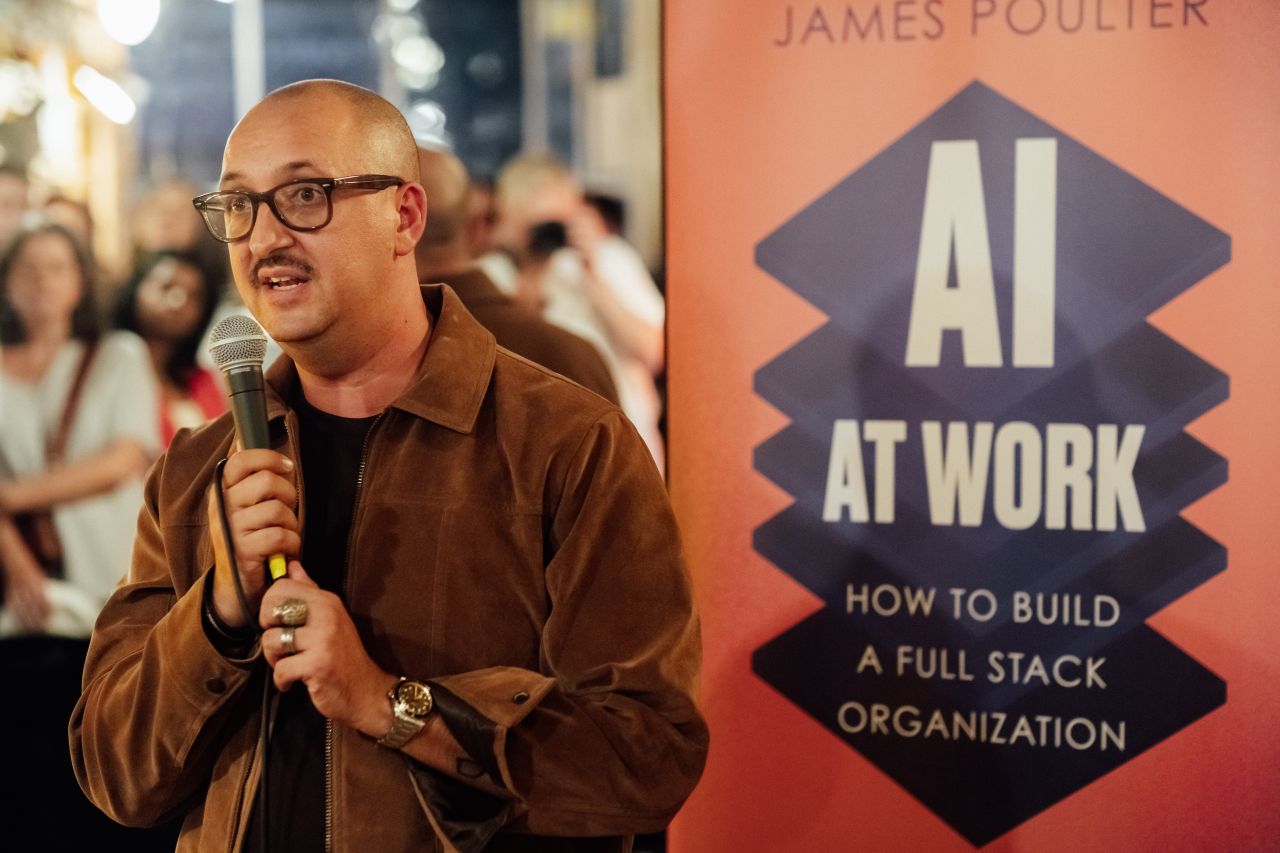
Everyone is talking about AI. Here are five things I heard at James Poulter’s book launch that stuck with me
On a Thursday evening in a small independent bookshop in Shoreditch, I went to hear James Poulter launch AI at Work. There was plenty about what AI can do. But the most interesting questions were about what happens to us. Everyone is talking about AI. Most of us are using it, too. Yet when James Poulter asked…
7–10 minutes -

Neurodiversity at Work Has an Awkward Truth: The Problem Is Often the Work
Neurodiversity at work has become much more visible. The lanyards, awareness weeks, employee networks and leadership statements are all there. Yet the everyday experience of work has not improved at the same pace. That is the uncomfortable message running through the Neurodiversity in Business Research Report 2026, produced by Birkbeck, University of London and Neurodiversity in…
3–5 minutes -

What I Use Instead of Another Internal Comms Post
Creativity matters in internal communications for the same reason it matters in advertising: getting people’s attention is hard. Employees receive messages all day through email, Slack, newsletters, presentations, notifications and company updates. Even an important message can disappear in that noise. Advertising and creative agencies have been solving this problem for decades. They use games,…
3–5 minutes
Most Read
Get it in your inbox
The EMEX weekly newsletter — insight for HR leaders every Thursday.
Advertisement