HeadFirst Global becomes Vertage – but the bigger shift is from headcount to outcomes
The EUR10 billion workforce group is uniting 11 operating businesses under one brand and platform. Its more ambitious bet is that companies will increasingly define the work they need done first, then use a mix of specialist talent and AI agents to deliver it.
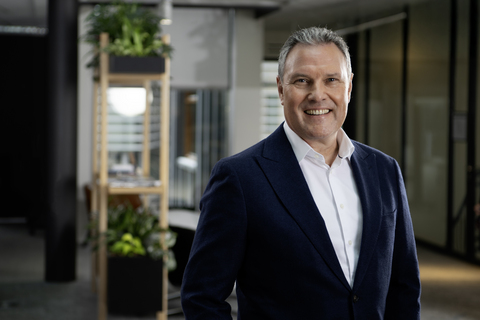
HeadFirst Global has announced it will become Vertage, bringing 11 workforce businesses under a single brand, technology platform and operating model.
The group’s existing operating brands – Comensura, Carbon60, Lorien, Guidant Global, Bartech, SRG, HeadFirst, Sterksen, StarApple, Striive and Prounity – are due to retire in Q1 2027. Existing contracts, delivery teams and day-to-day contacts will continue through the transition.
On the surface, this is a sizeable consolidation of brands. But the more interesting part for HR sits underneath it.
Vertage is building its model around a shift from buying headcount to buying outcomes. Instead of starting with the number of people required, a set of job titles or a rate card, the idea is that an enterprise defines the result it needs and the platform then assembles the combination of human specialists, suppliers and AI agents to deliver it.
In the company’s announcement, Vertage describes this as deciding whether to “build, bot, buy or borrow” the capability required.
That is a materially different way of thinking about workforce planning. Skills-based workforce models still largely start with people: what skills exist, what skills are missing and where they can be found. An outcomes-based model starts with the work itself, then asks who – or what – should do it.
It also pushes AI further into the workforce conversation. Vertage is not positioning AI simply as software that helps an employee work faster. Its strategy treats AI agents as one possible source of delivery alongside permanent employees, contractors and other specialist talent.
Edzard Overbeek, Global CEO of Vertage, said businesses face a dual challenge: adopting AI while managing the risk around investment and compliance. “Businesses must integrate AI to compete and survive but face real risk in how to invest successfully while staying compliant.”
There is an important caveat. Vertage says its customer research shows demand for the shift toward outcomes, but it has not published the methodology behind that research. This is a company strategy and product direction, rather than independent evidence that large employers have already moved away from headcount-based workforce buying at scale.
Still, the scale makes the bet worth watching. Vertage says the group has a community of 1.5 million specialists, operates across 80 countries and has more than EUR10 billion in gross invoice value.
For HR, the harder question comes if this model does take hold. Once a piece of work can be split between an employee, a contractor, a service provider and an AI agent, familiar boundaries around jobs, accountability and workforce ownership become less clear.
That problem is already appearing inside organizations. As EmEx explored recently, job architecture is starting to strain as AI changes who can perform work that once belonged to a particular role. Outcome-based workforce models take the same issue one step further: the organization may no longer decide the human role first at all.
For existing HeadFirst Global customers, the immediate change is much more prosaic: a new name, one operating model and the retirement of 11 brands from Q1 2027.
But the direction behind the rebrand is more consequential. Vertage is making a EUR10 billion bet that workforce planning will increasingly begin with the question “what needs to be delivered?” rather than “who do we need to hire?”
Whether employers are ready to reorganize work that way at scale is still an open question. But it is a useful marker of where the workforce solutions market thinks AI is heading: away from being an extra tool inside a job, and toward becoming one of the resources used to deliver the work itself.
Related Articles
-

Why lone working is one of the workplaces biggest safety blind spots, says safety expert
One of the most overlooked health and safety issues in workplaces is lone working, according to leading workplace health and safety expert, Brenig Moore. Across offices, schools, public buildings, shared spaces, and retail sites, many people are often asked to work before and after opening times, or at unsociable hours when nobody is around. That…
3–4 minutes -

How to keep a flexible frontline workforce connected and engaged
Frontline workforce models now have to be more flexible than ever, with employers looking to optimise their use of full-time, temporary and seasonal staff whose schedules can vary significantly from week to week. On the one hand, this is ideal for organisations that need to adapt to changing demand, often at short notice and particularly in sectors…
4–6 minutes -
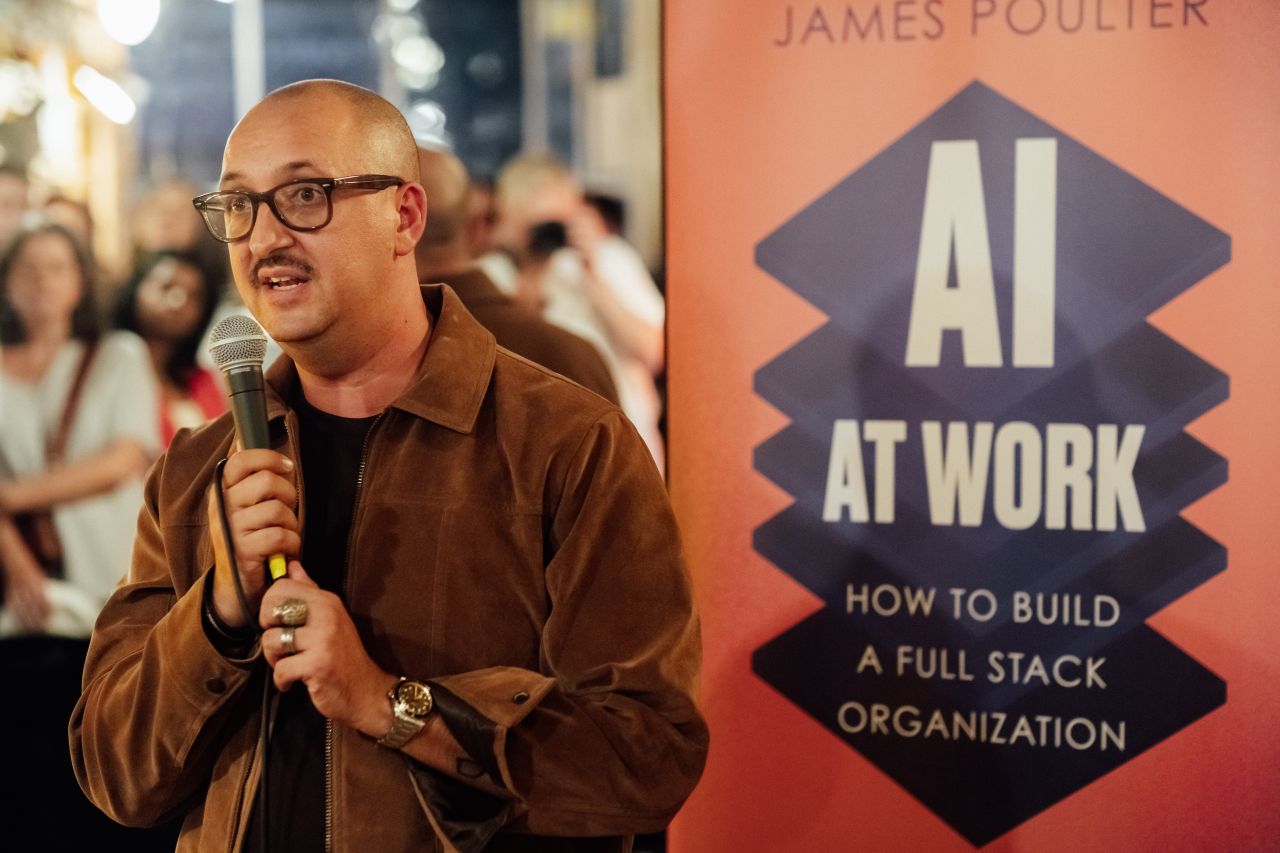
Everyone is talking about AI. Here are five things I heard at James Poulter’s book launch that stuck with me
On a Thursday evening in a small independent bookshop in Shoreditch, I went to hear James Poulter launch AI at Work. There was plenty about what AI can do. But the most interesting questions were about what happens to us. Everyone is talking about AI. Most of us are using it, too. Yet when James Poulter asked…
7–10 minutes
Most Read
Get it in your inbox
The EMEX weekly newsletter — insight for HR leaders every Thursday.
Advertisement