Why Digital Signage Is Becoming Part of the Connected Workplace
Hybrid working has changed more than where people work. It has also changed how organisations need to communicate when employees are actually in the building. Email and Teams may dominate day-to-day communications, but they are less useful when someone is moving through an office, looking for a meeting room, checking an operational update or simply…
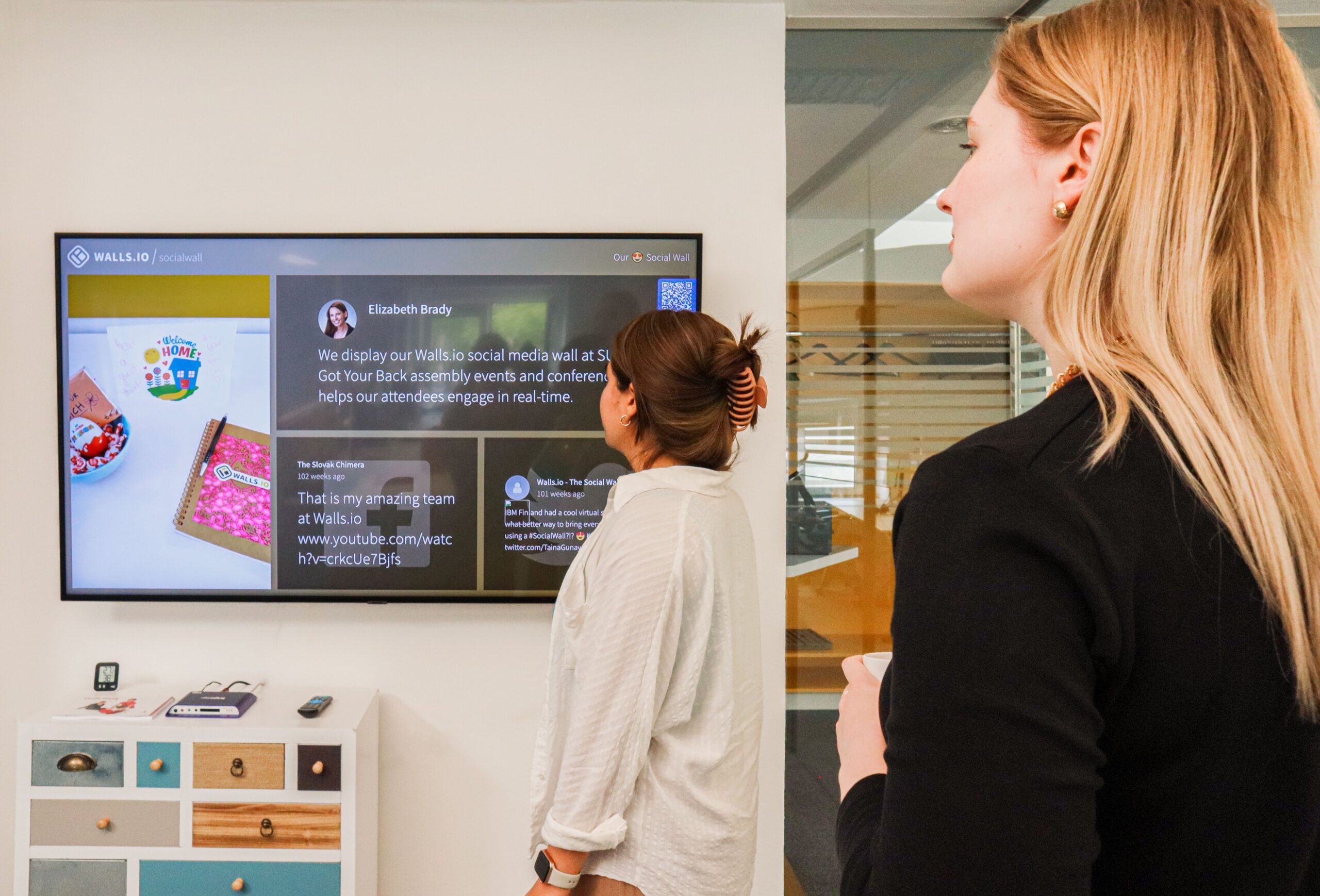
Hybrid working has changed more than where people work. It has also changed how organisations need to communicate when employees are actually in the building.
Email and Teams may dominate day-to-day communications, but they are less useful when someone is moving through an office, looking for a meeting room, checking an operational update or simply trying to work out where they need to be.
That is helping digital signage find a broader role in the modern workplace.
Once largely associated with corporate announcements and reception screens, workplace displays are increasingly being connected with room-booking platforms, facilities systems, occupancy data and other workplace technology.
From noticeboard to workplace tool
The most useful digital signage is becoming much more responsive.
Screens can provide live room availability, building information, safety messages and operational alerts alongside more traditional employee communications. In larger offices and campuses, they can also support wayfinding and interactive directories.
For employers trying to encourage people back into shared workplaces, that matters. The office has to be easy to navigate and useful when people are there.
Pierre Gillet, VP of International Sales at BrightSign, says organisations are increasingly treating digital signage as part of the wider workplace technology ecosystem rather than simply another communications channel.
AI is playing a role too, particularly behind the scenes. It can help automate content scheduling, monitor devices and identify potential problems across large signage networks.
More connected also means more secure
There is, however, a flip side to connecting more workplace technology.
As signage systems become linked to cloud platforms, building data, sensors and other business systems, they also need to be treated with the same attention to security and reliability as other workplace technology.
This becomes particularly important as organisations expand from a handful of screens to networks stretching across multiple offices.
IT and facilities teams need to know whether displays are working, whether content is current and whether devices are secure without physically checking every screen.
Edge computing — where some data is processed locally rather than continually being sent to the cloud — is also becoming more relevant as workplace signage begins to interact with sensors and real-time data.
The screen is only the visible bit
Perhaps the bigger shift is that workplace digital signage is becoming less about the screen itself.
Done well, it sits at the intersection of employee communications, workplace experience, facilities and IT: helping people find information, navigate buildings and understand what is happening around them.
As offices become more connected, the rather unglamorous infrastructure sitting behind those screens may ultimately be just as important as what appears on them.
This article is based on insights provided by Pierre Gillet, VP of International Sales at BrightSign.
Related Articles
-

What is a Leadership Credo?
A leadership credo is a short or long written statement that defines your personal or professional philosophy.
4–6 minutes -

Best Practice Sharing Platform & Template – UPDATED 2025
With an effective, robust best practice sharing platform, organizations can identify the practices that work the best for them.
5–8 minutes -

Communication Champion Role In Companies: The Definitive Guide To Why And How
When done right, communication champions bring in a lot of value to and seriously improve the efficiency of the organization.
5–8 minutes
Most Read
Get it in your inbox
The EMEX weekly newsletter — insight for HR leaders every Thursday.
Advertisement