Work Beyond Walls – Enough with the return-to-office debate; what if we ran a live experiment?
Work Beyond Walls turns Newcastle’s Boiler Shop into a live workplace experiment, asking what makes an office worth the journey.
Employers have spent years asking how many days people should spend in the office. In Newcastle, England, this September, 300 people will spend two days answering a rather better question: what would make an office worth going to?
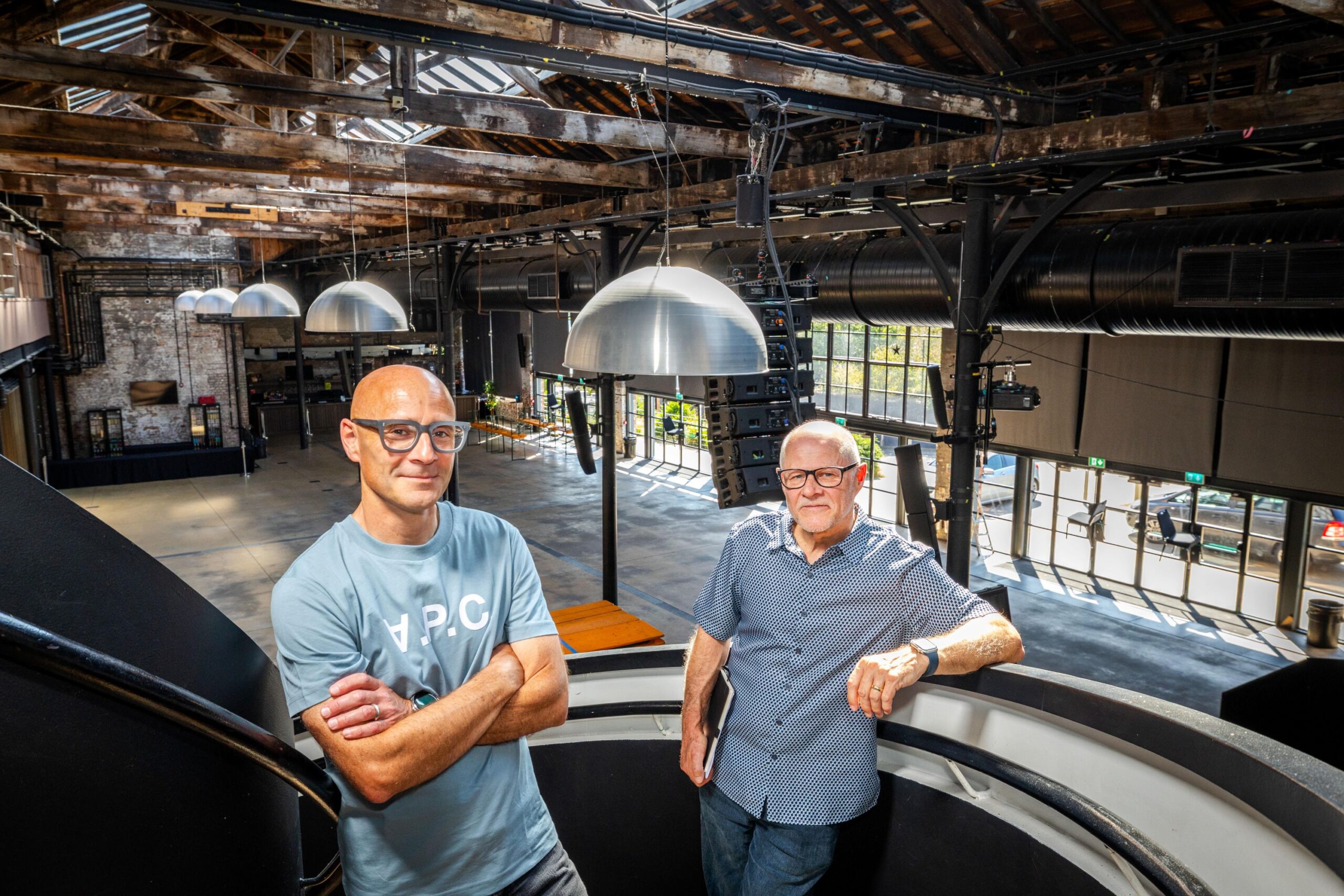
Work Beyond Walls will turn the Boiler Shop, a former locomotive factory, into what organisers describe as a “living workplace”. Rather than sitting through a conventional workplace conference, attendees will be able to work, meet, attend workshops and use spaces created by around 20 workplace brands, while their experience is studied in real time.
It is an interesting intervention at a point when the return-to-office argument seems determined not to go away.
In the US, new research from HRCI found that 61% of remote-capable workers would prefer hybrid work and 33% would prefer to be fully remote.
Meanwhile, the debate about why people need to be there is becoming more complicated. The Financial Times recently reported that consulting firms including EY, KPMG and PwC are encouraging more face-to-face working as AI absorbs more routine work, with physical proximity increasingly seen as important for developing human skills such as judgement, empathy, storytelling and leadership. Read the Financial Times report.
So perhaps the more useful question is no longer whether the office has a future. It is what employers expect the office to do.
Work Beyond Walls Asks What makes an office worth the journey?
That is one of the questions Work Beyond Walls intends to explore.
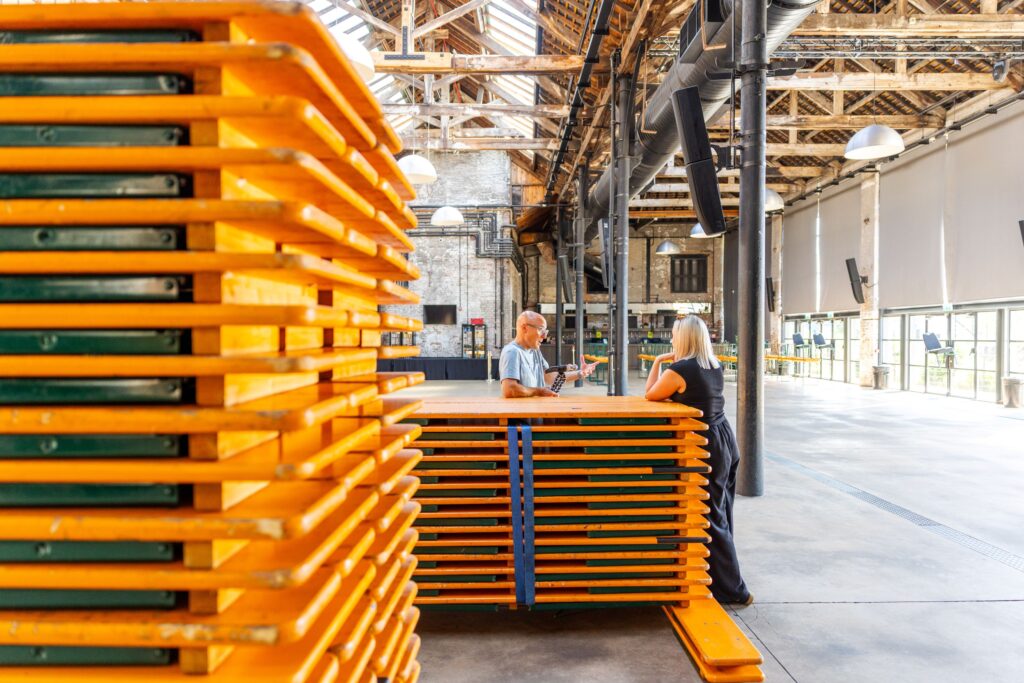
Its programme ranges from relationships and belonging to neuroinclusive design, wellbeing, sustainability and the effect workplace design can have on performance. One session will challenge employers to stop designing offices purely around tasks and instead consider which relationships the building needs to help create. Another will examine the “hidden performance tax” that can arise when workplaces are optimised around occupancy and efficiency rather than human performance.
There is a useful distinction there. Much of the return-to-office debate has focused on the measurable bit: days, desk occupancy, badge swipes and attendance.
But those things tell employers whether someone arrived. They tell them rather less about whether coming in was worthwhile. The employers who have dropped attendance mandates and tracking altogether tend to make that point loudly.
Work Beyond Walls is attempting to make some of those less tangible questions observable.
Philippa Lobb is Design/A&D Consultant at Workpattern. She has played an instrumental role in putting the event together. Philippa commented: “As the idea for the event was emerging, we asked ourselves – what is the problem we need to solve for the community? We soon realised that this is a debate which needs to happen across sectors and with a range of different people. The more that we learn, the more we have the opportunity to enhance wellbeing, productivity and prosperity for people and organisations.
“You can come for a talk, work from the space for a few hours, join a workshop or stay for the whole experience. It’s free, and we’d love people from right across the region to be part of it.”
Its WorkPulse survey will gather feedback during the event and add it to an existing dataset covering 2,369 UK employees, 9,340 individual viewpoints and more than 165,000 words of employee feedback.
One finding already stands out: 85% of respondents say their core colleagues are either essential or very important to their working lives.
Which perhaps gets closer to the real return-to-office question than another debate about whether the magic number is two days, three or five.
If people can do the work from their kitchen table, the office has to offer something the kitchen table cannot. And people are already voting with their laptops, as anyone who has watched colleagues decamp to cafes and restaurants for the afternoon will recognise.
That might be learning by watching someone more experienced. It might be relationships, spontaneous conversations, belonging or simply a physical environment designed to make certain kinds of work easier.
Work Beyond Walls won’t settle the hybrid-working debate in two days.
But there is something refreshingly practical about taking a question that has generated years of surveys, mandates and opinion pieces and saying: fine. Let’s build a workplace, put people in it and see what happens.
The Boiler Shop itself is an apt place to try it. Two centuries ago, it formed part of Stephenson’s Works, described by the organisers as the world’s first purpose-built locomotive factory, helping change the way people and goods moved around the world.
Now the experiment is asking a rather different question about movement: what would make people choose to make the journey to work?
Related Articles
-
The recognition gap: are we solving for the right thing?
There is a familiar moment in employee experience work when the engagement survey closes. The comments are read, themes are lifted into a narrative, and it is no great surprise when recognition surfaces as one of them. What usually follows is a hive of activity around recognition programmes. Either a relaunch of the one that…
4–6 minutes -

Sabio Group Strengthens Operating Board with Key CCO and CPO Appointments
Sabio Group, the AI-focused customer experience transformation specialist, has reinforced its leadership team with the appointment of Mark Starkey as Chief Commercial Officer (CCO) and Katherine Watkins as Chief People Officer (CPO). The dual appointments signal a strategic move by the firm to align its global commercial growth objectives directly with a robust people strategy, necessary for managing rapid…
1–2 minutes -

Zellis Group Acquires Hastee to Bolster HR and Payroll Offerings
Zellis Group, a prominent provider of AI-enabled HR, workforce management, payroll, and benefits solutions, has announced its acquisition of Hastee, a financial wellbeing platform. This strategic move aims to integrate earned wage access, financial education, and money management tools directly into Zellis’s existing portfolio, enhancing its employee wellbeing proposition. The acquisition reflects Zellis Group’s focus…
1–2 minutes
Most Read
Get it in your inbox
The EMEX weekly newsletter — insight for HR leaders every Thursday.
Advertisement