Is time running out for the employee engagement survey?
Employee engagement surveys have dominated HR for decades. Culture15 founder Charlie Coode argues behaviour may be a better measure for the AI era.

Every year, the employee engagement survey asks employees about leadership, communication, recognition and trust. Teams analyse the scores, brief leaders and chase action plans.
Six or twelve months later, they ask the same questions again.
The engagement survey has become part of the furniture. But when organisations are changing faster than the annual cycle can follow, is engagement still the most useful thing to measure?
The question is becoming urgent as businesses pour money into AI. BCG’s 2025 study of more than 1,250 companies found only 5% generating value at scale. Sixty per cent reported little or no material value.
The companies pulling ahead were redesigning workflows, building organisational buy-in, sharing ownership and developing new skills. Those are behavioural shifts.
An engagement survey can show how employees feel about a transformation. It cannot show whether managers are redesigning work, teams are challenging unreliable outputs or obsolete processes are being stopped.
Culture15 founder Charlie Coode believes HR has spent decades treating engagement as a proxy for culture and measuring the wrong end of the chain.
A measure built for a different era
Employee surveys became popular in the 1930s and 1940s, initially measuring morale and satisfaction. William Kahn’s 1990 paper later helped establish employee engagement as a field.
Listening has obvious value. The problem begins when the same tool is expected to manage culture and demonstrate readiness to execute strategy. Coode sees another unintended consequence.
“It’s a parent-child dynamic,” he said.
Employees explain what is wrong; management responds. They hear less about what the organisation needs from them.
Everyone looked at HR. Nobody had a method
Coode came to this through a background in operational and change roles. Around 16 years ago, he saw that leaders knew culture affected execution but lacked a framework for managing it.
“Everybody looked blankly at the HR leader,” he told me.
He established a consultancy to “professionalise the management of culture”. Culture15 grew from the proposition that organisations must define and measure culture if it affects performance.
Coode’s answer was observable behaviour.
One of Culture15’s CEO clients gave him a phrase he still uses: “No one experiences your values. They only experience your behaviours.”
That moves culture from words on a wall to daily behaviour: how information moves, whether people challenge and what happens when something goes wrong.
Start with strategy, not satisfaction
Coode’s method begins with a question HR leaders can take directly into an executive meeting: what culture does our strategy require?
“We don’t actually have a view of good or bad culture,” he said. “We only have the view of: do you have the culture that you need in order to be successful?”
A company trying to innovate may need challenge and action despite incomplete information. If its culture rewards hierarchy and avoiding failure, that gap could well become expensive.
A safety-critical organisation may need people to escalate bad news, admit mistakes and trust the response.
The organisation identifies the behaviours its strategy requires and compares them with current experience. Culture15 calls the difference the Culture Gap.
“The chain with Culture15 is different,” Coode said, comparing it with engagement surveys. “It starts with strategy.”
HR enables a management process rather than owning a listening exercise. Managers own behaviour; HR provides the framework and evidence.
When culture data appears beside safety data
The argument becomes commercially interesting when behavioural data sits beside performance. A waste and energy client found that lower-trust sites were also recording more operational and safety problems. It now uses trust as a possible early warning of risk.
There is a substantial difference between telling an executive team that trust has fallen by five points and telling it that lower-trust locations are also reporting more incidents and near misses.
The relationship was retrospective and correlation does not prove causation. Culture15 is now building a longitudinal dataset linking behaviour with safety, absence, customer, productivity and financial results.
Technology manufacturer Concurrent Technologies also places culture inside its transformation story. Its case study reports FY24 turnover of £41 million, up 25%. CEO Dr Miles Adcock called Culture15 “a profoundly important element of transforming the business”.
Culture measurement cannot claim that growth. But culture appears alongside the measures investors use to judge the business.
Employee listening cannot disappear
Coode’s alternative to the parent-child survey dynamic is an adult-to-adult contract.
“You can have certain expectations of us,” he said, “but we have certain expectations of you.”
Those behaviours can shape hiring, promotion, reward and performance. Managers become responsible for creating them, but employees cannot change systems or act on information they have not received.
The answer is not to stop listening, but to make the strategy, required behaviours and responsibility visible: who needs to change what?
Is the engagement survey on its way out?
Coode sees engagement and trust as outcomes of culture, not culture itself. In principle, culture measurement can replace the engagement survey. Most clients begin cautiously.
“Most of our clients start off running them side by side,” he said.
But the approaches answer different questions, creating fatigue and confusion. Eventually, Coode says, engagement must either remain the main event or become one measure within a broader view of culture.
Before you run the survey again, ask what changed
Before the next survey, HR could calculate its cost: platform fees, project management, analysis, briefings, workshops, action planning and chasing responses.
Then ask what changed because of it rather than whether the response rate increased or the scores moved by X. What business decision changed? What operational problem was reduced? What did managers begin doing differently?
There will always need to be protected space for employee listening, including scrutiny of who surveys fail to reach. But listening, measuring sentiment and managing culture are not always the same activity.
Would some of that money and management time create more value defining the behaviours strategy requires, measuring the gap and helping managers close it?
The engagement survey will not vanish tomorrow. But it may no longer deserve its automatic place at the centre of listening and culture work.
AI makes that distinction urgent. Organisations can spend heavily on technology, but the return depends on human choices: whether people trust the tools, challenge their outputs, redesign work and let obsolete processes go. This means that time is running out for treating an engagement score as evidence that an organisation is ready to change. Besides, by the time the scores have been cascaded, the latest change is likely to have happened anyway.
The next era may not be won by organisations with the highest engagement scores, but by those that close the behavioural gap before it becomes safety failures, stalled transformations or disappointing returns.
Related Articles
-
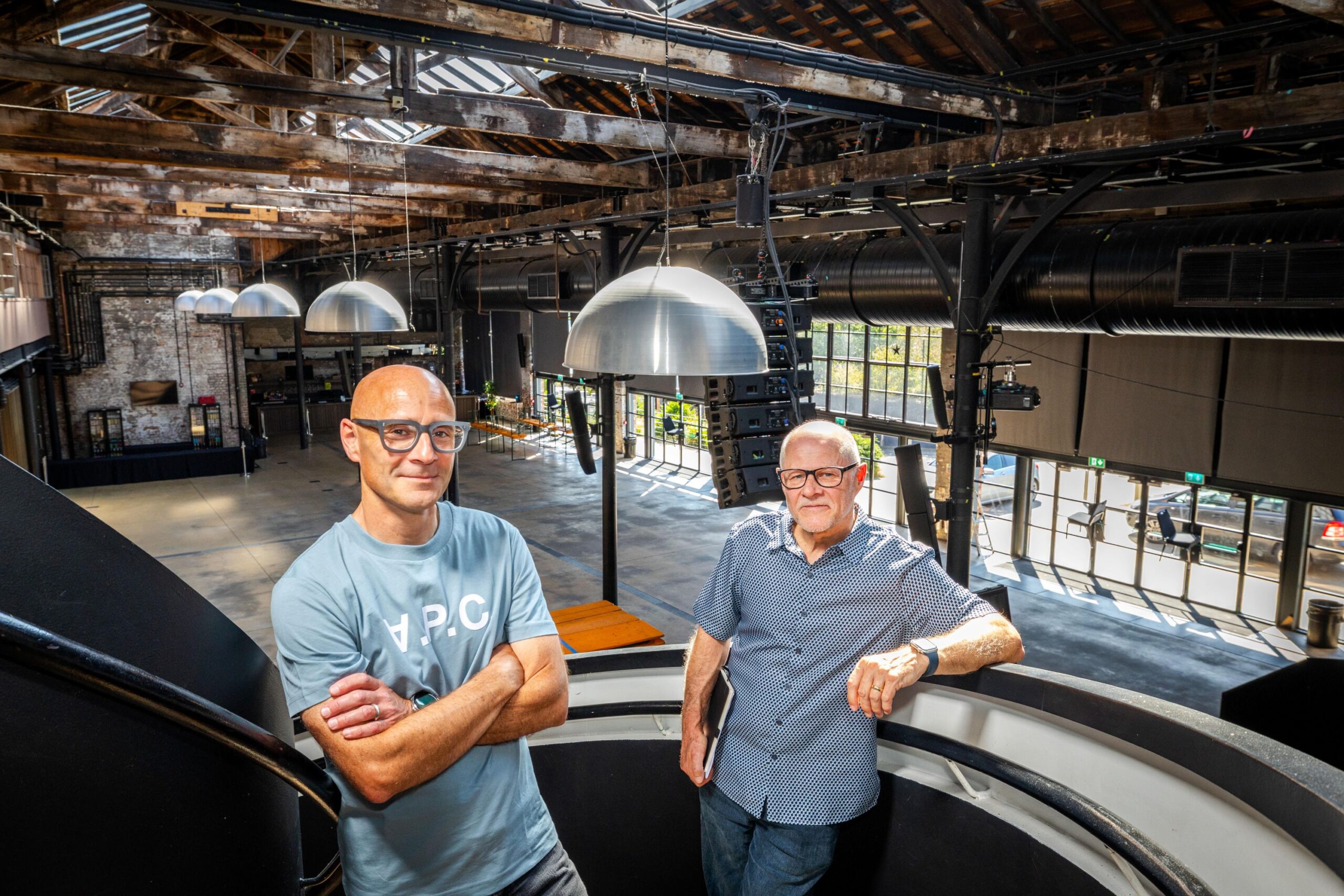
Work Beyond Walls – Enough with the return-to-office debate; what if we ran a live experiment?
Work Beyond Walls turns Newcastle’s Boiler Shop into a live workplace experiment, asking what makes an office worth the journey.
3–5 minutes -

The recognition gap: are we solving for the right thing?
There is a familiar moment in employee experience work when the engagement survey closes. The comments are read, themes are lifted into a narrative, and it is no great surprise when recognition surfaces as one of them. What usually follows is a hive of activity around recognition programmes. Either a relaunch of the one that…
4–6 minutes -

Sabio Group Strengthens Operating Board with Key CCO and CPO Appointments
Sabio Group, the AI-focused customer experience transformation specialist, has reinforced its leadership team with the appointment of Mark Starkey as Chief Commercial Officer (CCO) and Katherine Watkins as Chief People Officer (CPO). The dual appointments signal a strategic move by the firm to align its global commercial growth objectives directly with a robust people strategy, necessary for managing rapid…
1–2 minutes
Most Read
Get it in your inbox
The EMEX weekly newsletter — insight for HR leaders every Thursday.
Advertisement