The AI jobs story may be 11 million career changes, not 11 million lost jobs
McKinsey models more job creation than automation-driven job losses in the US by 2035. The harder problem is movement: roughly 11 million workers may need to switch occupations, while cross-group career moves would need to happen at 3.6 times the historical rate.
3–4 minutesHow to Plan an Office Christmas Party Your Team Will Actually Enjoy
It’s October, and someone has just said, “Could you sort the Christmas do?” You said yes. Now you own the office Christmas party. Take a breath. A good office Christmas party doesn’t need a huge budget or a clever theme. It needs a clear plan, an early booking and a guest list that includes everyone….
6–9 minutesMeta AI Adoption Revealed: Behind the curtain at Meta, 3 ways AI is already changing work
Meta AI adoption has gone from encouragement to expectation in a year. The company has reorganised thousands of jobs around AI and pushed employees to become AI-native. It has started testing an autonomous agent called Hatch. And its AI chief, Alexandr Wang, has just moved everyone’s internal conversations from Google Chat to Slack.
4–6 minutesThe experience gap is also a trust gap
Young workers are told they need experience before they can be trusted with responsibility. But without trust, feedback and a chance to try, where is that experience supposed to come from?
6–9 minutesAI use is rising. Access to learning is falling.
PwC’s 2026 Global Workforce Hopes and Fears Survey finds AI adoption is accelerating while fewer workers can access the development they need — widening the gap between employees already benefiting from AI and those still trying to catch up. AI adoption at work is moving faster than employee development. PwC’s 2026 Global Workforce Hopes and…
2–3 minutesAutistic or ADHD? 5 questions to ask before your next job interview
Job interviews can reward fast answers, social fluency and comfort with ambiguity as much as they test whether somebody can do the job. For autistic and ADHD candidates, a few questions in advance can help make the process fairer — and more useful for the employer too. Interviews are stressful for plenty of people. But…
2–4 minutesHR AI is moving from answering questions to running the workflow
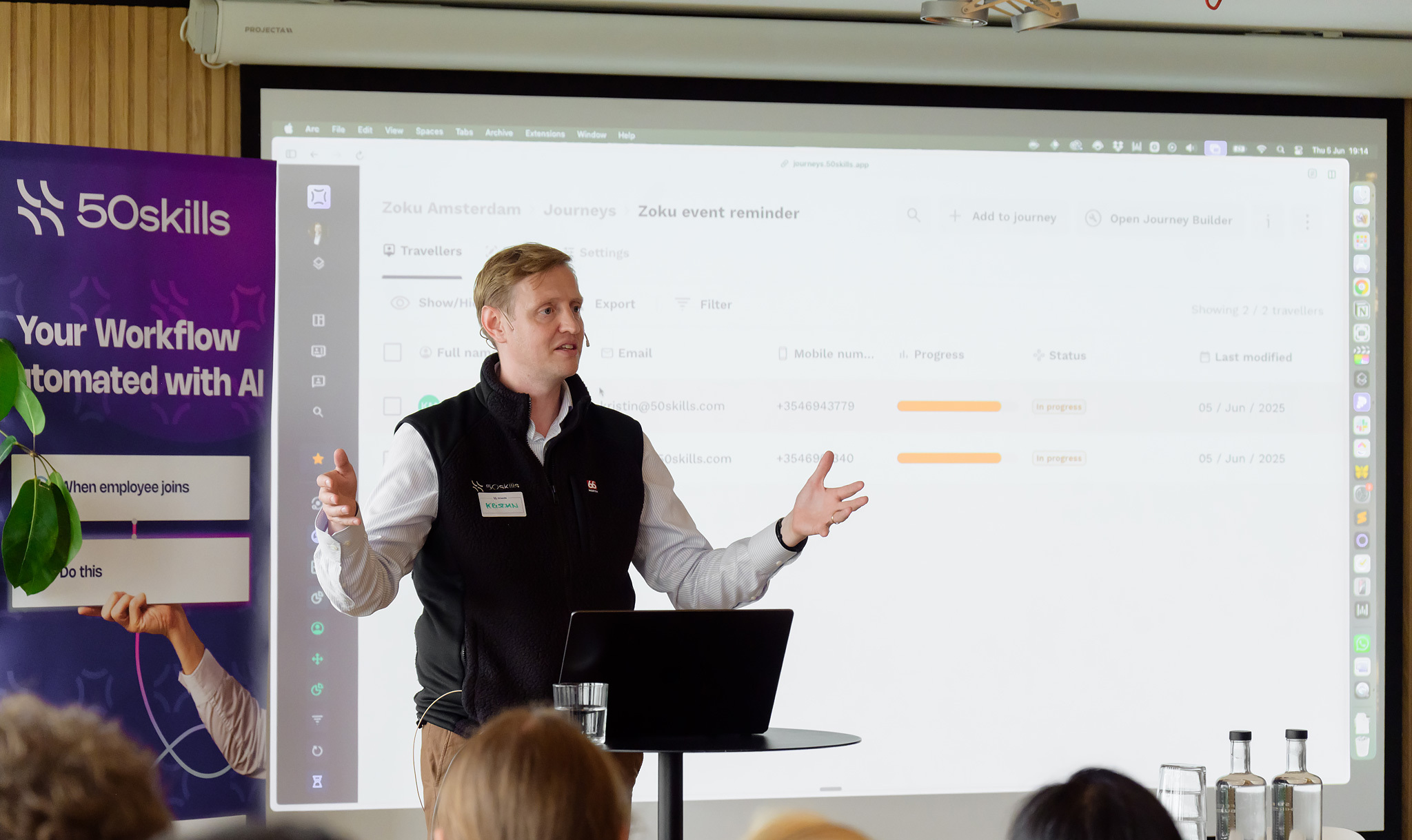
50skills has raised $6 million after customers automated millions of people-process actions. The more interesting story is what happens when AI stops assisting HR and starts executing the work.
3–5 minutesHeadFirst Global becomes Vertage – but the bigger shift is from headcount to outcomes
The EUR10 billion workforce group is uniting 11 operating businesses under one brand and platform. Its more ambitious bet is that companies will increasingly define the work they need done first, then use a mix of specialist talent and AI agents to deliver it.
2–4 minutesIs time running out for the employee engagement survey?
Employee engagement surveys have dominated HR for decades. Culture15 founder Charlie Coode argues behaviour may be a better measure for the AI era.
5–7 minutesEveryone is talking about AI. Here are five things I heard at James Poulter’s book launch that stuck with me
On a Thursday evening in a small independent bookshop in Shoreditch, I went to hear James Poulter launch AI at Work. There was plenty about what AI can do. But the most interesting questions were about what happens to us. Everyone is talking about AI. Most of us are using it, too. Yet when James Poulter asked…
7–10 minutesNeurodiversity at Work Has an Awkward Truth: The Problem Is Often the Work
Neurodiversity at work has become much more visible. The lanyards, awareness weeks, employee networks and leadership statements are all there. Yet the everyday experience of work has not improved at the same pace. That is the uncomfortable message running through the Neurodiversity in Business Research Report 2026, produced by Birkbeck, University of London and Neurodiversity in…
3–5 minutesLondon Weighting and Location-Based Pay: Why Geography Raises Some Salaries and Discounts Others
London weighting pays a premium for working in the capital. But as other cities become more expensive and work goes global, does location-based pay still make sense?
4–6 minutes









Most Read
Advertisement