Real Wages Are Nearly Back to Growth. What the Latest Data Means for Business and Employees.
After two years of pay packets losing ground to rising prices, the gap on wages is starting to close. The latest official data from both sides of the Atlantic, covering the period to mid-2026, suggests that real wages are approaching a turning point. For HR leaders and business owners, this is welcome news and the…
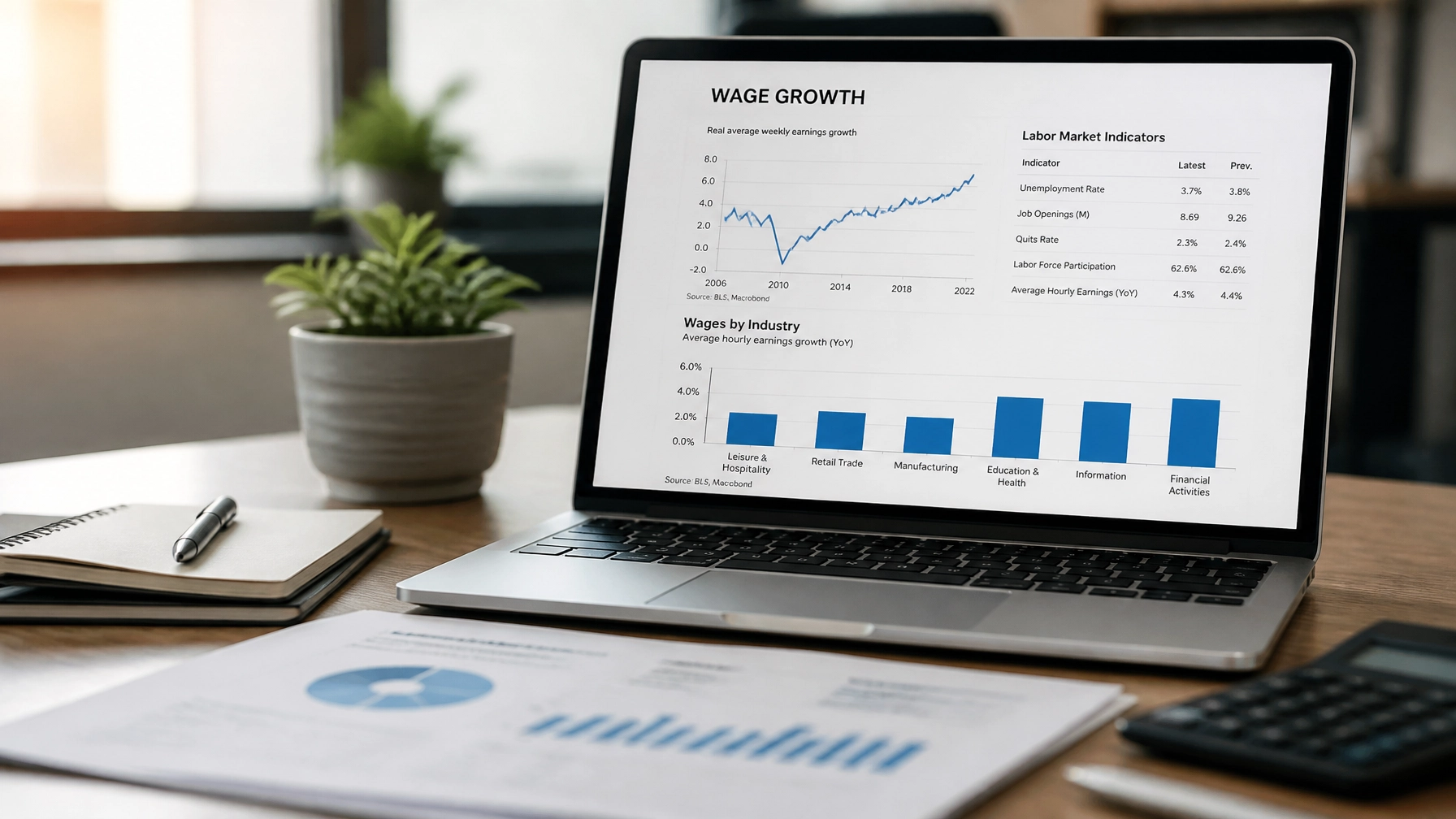
After two years of pay packets losing ground to rising prices, the gap on wages is starting to close. The latest official data from both sides of the Atlantic, covering the period to mid-2026, suggests that real wages are approaching a turning point. For HR leaders and business owners, this is welcome news and the shift has real consequences for retention, engagement, and financial wellbeing strategy.
REAL WAGES IN THE US are stabilising
In the United States, the Bureau of Labor Statistics reported that real average hourly earnings edged up 0.1 percent year-over-year in June 2026. This doesn’t look like an exciting statistic, but behind the small number is the beginning of a new direction. Inflation has fallen from its peak, and US wage growth now tells a steadier story than it did a year ago. For employers, real wages no longer point to the same level of acute pay pressure that shaped reward decisions through 2023 and 2024.
The Indeed Hiring Lab tracked posted wage growth at 2.4 percent year-over-year for June. Meanwhile, annual CPI inflation stood at 3.5 percent, down from 3.6 percent in May and significantly below the 9.1 percent peak in 2022. The gap between wage growth and inflation is narrowing. Real wages are essentially flat rather than declining now,
UK REAL wages are edging ahead
Across the Atlantic, the picture is marginally more positive. According to the Office for National Statistics, average weekly earnings excluding bonuses grew by 3.4 percent in the March to May 2026 period. With CPI inflation at 2.6 percent and CPIH inflation at 2.8 percent, regular pay has started to grow in real terms. ONS data shows real wages rose by 0.3 percent. Again, it’s not much higher than the US, but it once again shows promise.
The typical UK worker now earns around £699 per week in regular pay. After adjusting for inflation, that represents a small but genuine improvement in purchasing power. Real wages are moving in the right direction, even if the gains still look modest.
What this means for business
The macroeconomic story here is one of psychology. When employees feel their pay is falling behind the cost of living, engagement suffers and attrition risk rises. To put it bluntly, it’s hard to stomach the ever increasing cost of food when your salary isn’t increased to match, or you’re forced to take a new job with a lower salary than you would have received before. But when wages are seen to be fair, employees can stop worrying about the cost of groceries and get on with the work at hand. Bank of America’s 2026 Workplace Benefits Report found that employee financial wellbeing has reached a four-year high, with 55 percent of workers rating their financial status as good or excellent. That figure has climbed 11 points since 2023.
The convergence of real wages and falling inflation reinforces this trend. Employees who feel financially stable are more engaged, more productive, and less likely to leave. For HR leaders, the opportunity is to shift financial wellbeing messaging from crisis management to long-term planning. The data finally supports that conversation.
The wage-inflation gap is not closed entirely. US real earnings are still broadly flat rather than growing. But the direction of travel has changed and rather than looking a negative picture, after years of pressure, pay is starting to hold its own. Real wages are nearly back to growth, and after a long period of being flat.
The latest numbers do not solve every pay problem, but they do show real wages moving back towards healthier ground, which is always good news for employees and businesses alike.
Related Articles
-

Leaders Say AI Is Saving Time. Workers Are Less Convinced.
Vertage research finds 71% of leaders say AI adoption has increased capacity, against 43% of workers. What HR should ask about the time AI frees up.
2–3 minutes -

AI and Labour Relations: Employers Expect Organising, Few Feel Ready
Only 9% of employers feel very prepared for AI and labour relations, yet 87% expect unions to use AI fears to organise, a Littler survey finds.
3–5 minutes -

Forget the Four-Day Week. What Happens When AI Does a Third of Your Job?
At Employee Benefits Live 2026, conversations about AI, fair pay, childcare and employee wellbeing led me to a question for HR and reward leaders: if AI frees up 12 hours of someone’s working week, does that time belong to the employer or the employee?
5–7 minutes
Most Read
Get it in your inbox
The EMEX weekly newsletter — insight for HR leaders every Thursday.
Advertisement