When AI Makes Everyday Life Easy, What Will People Want From Work?
The next decade could make everyday life almost frictionless. That might change what we want from work more than any workplace technology ever has. We spend a lot of time asking what AI will do to jobs. Perhaps we should be asking a different question: What will people want from a job once AI has…

The next decade could make everyday life almost frictionless. That might change what we want from work more than any workplace technology ever has.
We spend a lot of time asking what AI will do to jobs. Perhaps we should be asking a different question: What will people want from a job once AI has changed almost everything else about their lives?
That is where the really interesting future of employee experience begins.
The EmEx newsletter
Get one practical EX read every Wednesday
Join the HR and employee experience leaders who read EmEx each week. It is free, and you can unsubscribe at any time.
Today, we are still measuring engagement, redesigning intranets and trying to persuade people to use the latest workplace assistant. Meanwhile, the world outside work is changing at extraordinary speed. Stanford’s 2026 AI Index puts organizational AI adoption at 88%. Yet Gallup’s 2026 report found just 20% of employees worldwide were engaged at work in 2025.
The technology is arriving. The human experience is not automatically improving.
2027: The year work starts to learn us
Next year won’t bring a science-fiction revolution. It may bring something more useful: the first genuinely noticeable disappearance of workplace friction.
Imagine starting a new job without a week spent navigating twelve systems. Your digital guide understands your role, introduces the people you need, explains the unwritten rules and arranges the tools you actually use. No one has to tell you where to find the leave policy. It simply answers when you need it.
For a nurse, that might mean a smarter shift swap and less time documenting routine notes. For a store manager, it might mean a schedule that responds to real staffing needs rather than somebody’s spreadsheet. For a desk-based employee, an AI agent might prepare a meeting, summarize the decisions and chase the actions, leaving the people in the room to think.
This is more than a better chatbot. It’s a shift from employees adapting themselves to clumsy systems toward systems adapting to the people using them.
It should also change development. Instead of waiting for an annual conversation about career goals, people could receive suggestions for projects, mentors and skills based on where they want to go. The World Economic Forum expects 39% of workers’ core skills to change by 2030. A career path that updates once a year will feel hilariously out of date.
But there is a catch. If AI makes work faster and employers simply fill every recovered minute with more work, we haven’t improved employee experience. We’ve invented a more efficient treadmill.
Now, let’s move the clock forward ten years.
2037: A very ordinary Tuesday in a very strange world
It’s 7:12 a.m. Your home knows you slept badly, so your alarm went off twenty minutes later. Breakfast is already planned around what’s in the kitchen. The fridge has ordered milk. Your household robot has folded the laundry, apart from one fitted sheet that continues to defeat it.
Your child’s AI tutor has adapted today’s lesson to the question she asked over dinner last night. Your father has a medical appointment booked by his personal assistant, which has already gathered the relevant notes and translated the clinician’s explanation into language he understands.
You haven’t opened an app. You haven’t searched for anything. You haven’t spent forty minutes on hold listening to a cheerful recording explain how important your call is.
Your personal AI has quietly handled the small negotiations of daily life: comparing bills, rescheduling a delivery, renewing insurance and making sure the family calendar doesn’t require three people to be in five places at once.
Some of this will be wonderful. Some will be messy. We will argue about privacy, mistakes, access and who gets to enjoy these conveniences. But imagine the cumulative effect of removing thousands of tiny administrative burdens.
Now imagine walking into work.
Welcome to the workplace that doesn’t need you for admin
Your work AI has already spoken to your personal AI. Not to exchange your private life story, but to agree what information you are willing to share, when you are available and which requests genuinely need your attention.
The overnight agents have run the analysis, compared options and identified three possible ways forward. Your team doesn’t gather to watch twenty-seven slides. You gather to decide which future you actually want to create.
The company has fewer fixed job descriptions. People join missions, assemble teams around problems and bring their own blend of skills, judgment and imagination. A junior employee can test an idea that once required a whole department. An experienced colleague’s value lies less in knowing every answer than in recognizing which answer is dangerous, brilliant or missing the point entirely.
Your office, when you visit it, looks less like a field of desks and more like a studio, workshop and neighborhood gathering place. There are rooms built for disagreement, places for making things and spaces where people can teach one another. The reason to turn up is no longer that your manager wants to see you sitting there.
And the most interesting employee benefit? Perhaps it isn’t a benefit at all. It’s permission to be gloriously, unapologetically human: to think slowly, take a risk, care for someone, change your mind or have an idea that no algorithm would have predicted.
The great employee experience question: Who owns the freedom?
There is, of course, another possible 2037.
Every minute of your day is optimized. Your AI flags a dip in productivity before you feel tired. Your manager receives an emotional-risk score. Your performance is compared with a machine-assisted version of you that never has a bad morning. Flexible work exists, but only within the boundaries of an algorithm you can’t challenge.
That is not an employee experience utopia. It is surveillance with nicer graphics.
The difference between those two futures is not the sophistication of the technology. It is who has control: who can question a decision, switch a system off, keep something private or say, “Actually, I need help from a person.”
If the next decade makes intelligence cheap and assistance abundant, then trust, belonging, fairness and genuine human attention may become more valuable, not less. And employers may find themselves competing on something harder to copy than a benefits platform: how it feels to be a person inside their organization.
This is the lightbulb moment for employee experience. For years, we’ve treated EX as a collection of things employers provide: a portal, a perk, a program, a survey. In the future, its greatest achievement may be the things employees no longer have to endure, and the possibilities they finally have room to pursue.
The work starts in 2027, not 2037. Remove one pointless approval. Give people a real say in how AI is used. Invest in the skills that help them direct it. Protect the time that automation gives back.
Because the future of employee experience isn’t making work more human despite AI.
It’s making work more human because of it.
Related Articles
-
86% of UK firms plan to grow or hold their engineering teams, and adaptability now beats coding skill in hiring
CodeYourFuture’s survey of UK developers finds employers now rank adaptability above coding skill in early-career hires, while only 16% recruit from non-traditional routes.
2–3 minutes -
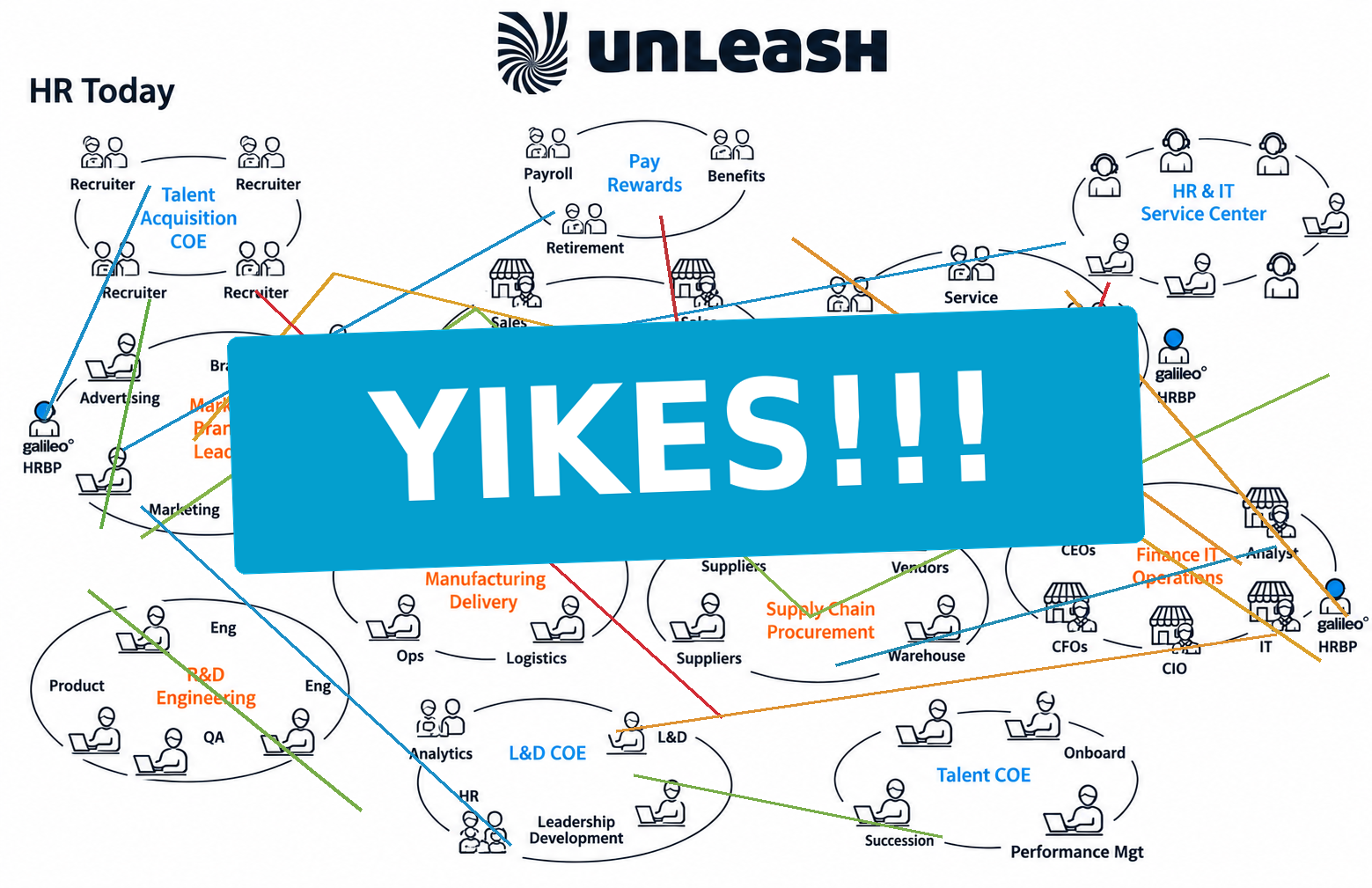
HR 2030: Josh Bersin on HR’s past and future
From shrinking labour markets and AI-powered employees to an HR function run by interconnected digital agents, Josh Bersin took us through the past, present and future of HR at UNLEASH in Paris.
6–10 minutes -

Flexible Working Requests Get a Reasonableness Test, and Records Will Carry the Weight
Refusing flexible working requests will need a written, reasoned file from autumn 2027, and the Acas consultation on the code is open until 17 December.
4–7 minutes
Most Read
Get it in your inbox
The EMEX weekly newsletter — insight for HR leaders every Wednesday.
Advertisement